Garden waste has a habit of accumulating faster than anyone plans for. A weekend of hedge trimming, one overdue clean-up of the back corner, or a single tree prune produces a pile that no household bin will absorb. Professional garden waste removal exists to solve the logistics: the material is bulky, heavier than it looks, and needs to reach a facility licensed to process it. Handled correctly, all that green matter becomes mulch, compost, or soil conditioner rather than methane in a landfill cell.
The environmental case is straightforward. Organic material buried without oxygen produces methane, a far more potent greenhouse gas than carbon dioxide, and garden organics still make up a significant share of what households send to landfill. Diverted properly, the same material re-enters the soil cycle. That is why councils run dedicated green bins and why commercial garden waste removal operators send loads to composting facilities rather than tips, processing branches through equipment governed by published woodchipper operation requirements. It is one of the few genuinely circular waste streams available to households.
What Can and Cannot Go In
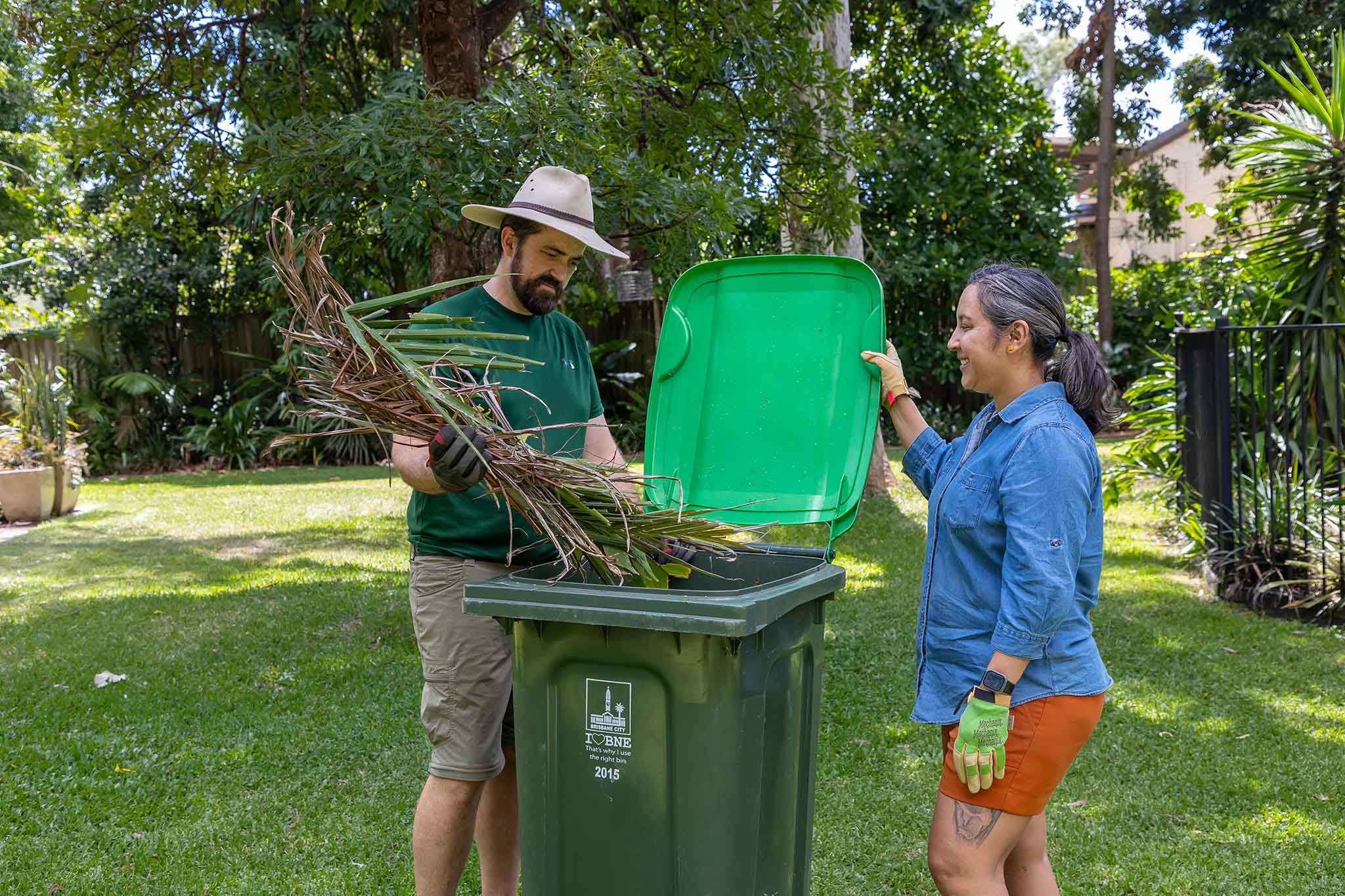
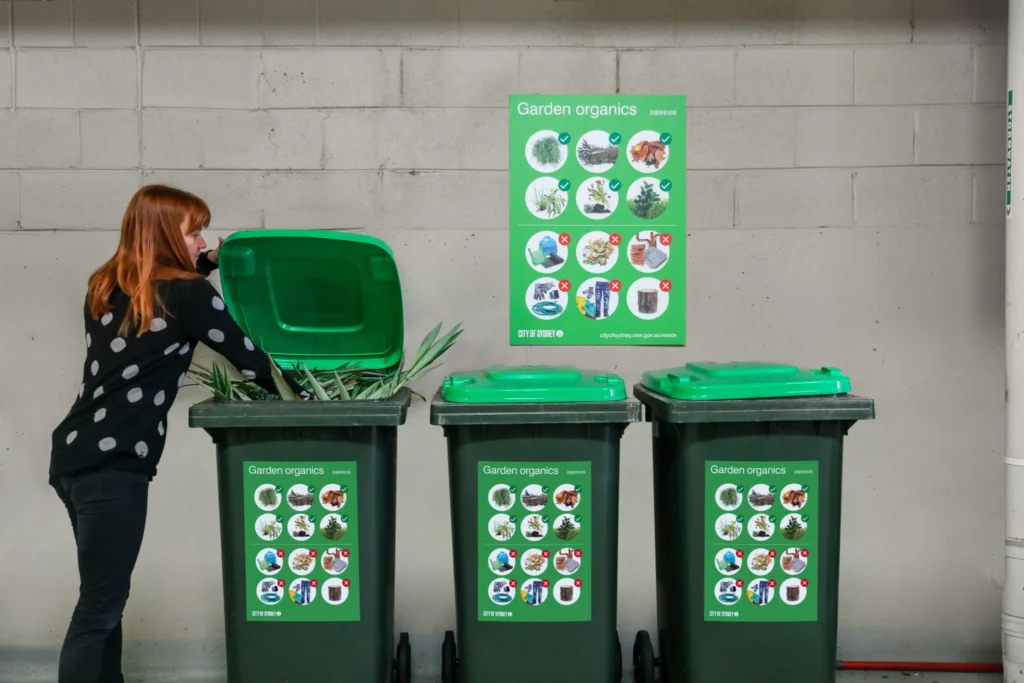
Accepted material is untreated organic matter: grass clippings, leaves, prunings, branches, weeds, palm fronds, small logs, and stump grindings. The exclusions cause most of the trouble. Treated pine, painted or preserved timber, and anything with nails or metal fixings cannot enter a composting stream. Soil, rock, and rubble are usually refused because they contaminate the product and damage equipment. Plastic pots, ties, and hose offcuts are the most common accidental contaminants. Declared noxious weeds sometimes need separate handling so seed is not spread through finished mulch.

Collection, Skip, or Council Service
Three options cover most situations. Council green bins and scheduled kerbside clean-ups are the cheapest route for modest, ongoing volumes, though frequency and size limits constrain them. Skip bins suit medium projects where you want to load progressively over a weekend, priced by volume and hire period. Full-service garden waste removal is the choice for large volumes or heavy material, since the crew loads and hauls, and often chips branches on site, cutting volume by eighty percent or more. Match the option to the volume and you avoid paying for capacity you never use.
- Council green bins for regular, low-volume household material
- Skip bins for progressive loading on medium projects
- Full-service collection with on-site chipping for large volumes
- Separate handling for treated timber and contaminated loads
- Home composting or mulching to keep nutrients on site
How Pricing Works
Green waste is charged by volume or weight, and fresh material is heavy because of water content: green hardwood approaches a tonne per cubic metre. Expect a call-out or truck fee plus a volume rate, with facility gate fees built in. Chipping on site lowers the total by reducing loads. Stump grindings often attract a separate rate because they carry soil and grit. If a tree crew is already at your property, bundling the disposal into that quote is nearly always cheaper than arranging separate garden waste removal later. Compare on total delivered cost rather than the headline rate, since a low volume price paired with a high call-out fee often lands above a single all-inclusive figure.
Volume: How to Estimate What You Actually Have
Most people underestimate their pile by half, which is how they end up paying for a second load. A useful rule of thumb is that a standard six by four trailer holds roughly one cubic metre when level and closer to two when caged and packed. A large hedge trim easily fills two or three cubic metres of loose material, and a single mature tree prune can produce five or more before chipping. Loose branches occupy enormous space relative to their weight, which is why chipping changes the economics so dramatically. Stack material in one place before you request a quote, keep it clear of the fence line and the footpath, and take a photo with something recognisable beside it for scale.
Illegal Dumping and Who Carries the Risk
Tipping garden waste into a reserve, bushland edge, or vacant lot is illegal dumping, and enforcement is considerably more active than most people expect. Regulator guidance on managing garden waste spells out the consequences: significant on-the-spot fines, prosecution for serious offences, and recovery of clean-up costs. Crucially, liability attaches to both the person who generated the waste and whoever transported it, so hiring an unlicensed operator does not shift your exposure. Ask where the load is going, and keep the receipt. Legitimate operators name their facility without hesitation.
Keeping Some of It on Site
The cheapest disposal is the material that never leaves. Chipped prunings make excellent mulch, suppressing weeds, moderating soil temperature, and noticeably reducing summer watering. Spread it seventy five to one hundred millimetres deep, keeping it clear of trunks and stems to avoid collar rot. Soft green material and clippings compost readily in a bay or tumbler, balanced with dry carbon-rich matter. Larger sections can be cut for firewood where the species suits, or stacked in a quiet corner as habitat. Retaining part of the load cuts both cost and truck movements.
Choosing a Provider
Transparency beats price here. A reputable operator will name the receiving facility, state clearly what they can and cannot accept, and explain how volume is measured before quoting. Ask whether they chip on site, since that affects both cost and how long a truck occupies your driveway. Confirm insurance if machinery is coming onto the property, and get the inclusions in writing. Genuine garden waste removal businesses treat recycling as the core of the operation rather than a marketing line, and their answers show it. Book ahead where you can, since demand spikes after storms and through spring, and the operators worth using are usually the ones with a waiting list. For recurring maintenance, a standing seasonal collection costs less per load than calling around each time the pile gets out of hand, and it keeps the yard from reaching the point where a single clean-up becomes a full day’s work.